
It is just another night on the streets for Kim Do Gi (Lee Je Hoon) when his passenger, a young woman, begins talking about the song playing on the radio. She shyly confesses that it is her favorite, the very song that inspired her to dream of becoming an idol, someone who can heal others through music. Kim Do Gi listens quietly, offering words of encouragement as he drops her off.
warning: mentions of suicide
Moments later, a sense of unease sets in. Trusting his instincts, Do Gi swerves back toward the spot where he left her near a bridge, only to realize his fears were justified. The young woman has jumped. Without hesitation, he dives in after her, saving her life and rushing her to the hospital.
But even after she regains consciousness, the danger doesn’t end. Weak and traumatized, she is confronted by her manager, who aggressively pressures her to return to the agency. When the situation turns violent in the hospital parking lot, Kim Do Gi and the Rainbow Taxi team intervene, having already sensed that something is deeply wrong.
The girl is Ro Mi (Oh Ga Bin), an idol trainee trapped in a cycle of abuse, gaslighting, and blackmail by her agency, headed by CEO Kang Ju Ri (Jang Nara). Her confession opens a Pandora’s box, exposing an operation where young women, bound by ruthless contracts, find their lives and bodies sold to the highest bidder.
As Do Gi and his team dig deeper, they set out to dismantle the corrupt machinery hiding behind the glossy facade of the entertainment world—determined to protect countless hopefuls from having their dreams, and their futures, destroyed. Here are three moments in the latest episodes of “Taxi Driver 3” that had us glued to the screen.
Warning: spoilers from episodes 9-10 ahead!
Idol dreams on contract

Ro Mi and her best friend Ji An aspire to be K-pop idols. It is a familiar fantasy for many talented youngsters, who, like their favorite idols, dream of owning the stage and spreading joy through their music. The two young girls diligently send their audition videos to agencies, hoping for that one call that could change everything.
One day, their long cherished dream comes true. They are contacted by Yellow Star Agency, headed by Kang Ju Ri, who is planning to introduce a new girl group called Elements. Overwhelmed by the contract clauses and the costs involved, the impressionable girls are reassured that the agency will take care of all expenses. All they need to do is prepare.
They meet three other young girls, forming the Elements quintet. Excited to begin their journey from trainees to idols, the girls are placed under a strict and rigorous regime. What follows, however, is not discipline, but sustained mental abuse, gaslighting, and violence.
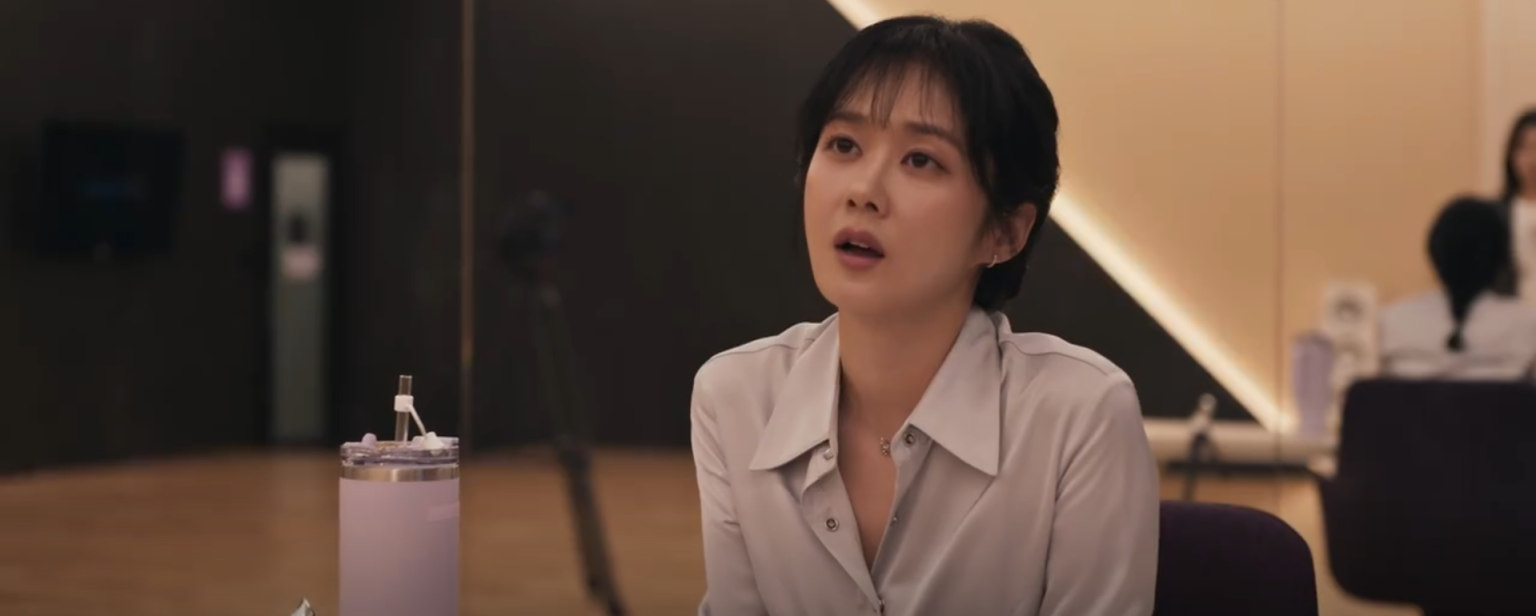
The abuse here isn’t loud or theatrical, it is psychological. The five girls are constantly criticized, their bodies scrutinized, and their personalities chipped away at. They are told they are too much, not enough, and replaceable. Praise is rationed, humiliation normalized. Over time, their confidence erodes and self doubt takes root. When boundaries are crossed, they are made to believe it is their fault, that endurance is the price of wanting success badly enough. Ambition, however, also demands compromise, and in this case, it takes the form of blackmail.
One night, Ro Mi finds herself in a strange bar with no recollection of how she got there. Viewers learn that her manager had made her drink water laced with drugs, under the pretext of taking her to meet the CEO. Soon after, Ju Ri presents Ro Mi with a video, warning her that footage of her being found under the influence, even before her debut, would destroy her career.
The way out is brutal. Ro Mi is told she must accompany the person who has uploaded the video and act as his escort. If she refuses, her career would be over before it has even begun—and she would also be forced to repay the crushing penalty of all the costs incurred on her training.
Overwhelmed and terrified, Ro Mi runs away and attempts to end her life, until she is saved by Do Gi.
“Taxi Driver 3” captures this emotional gaslighting with chilling clarity. By the time contracts are signed, consent has already been engineered. Dreams become commodities, and the girls, conditioned to feel grateful for being chosen at all, stop recognizing the abuse for what it is. Stardom here doesn’t arrive with a spotlight, it arrives with obedience and with toeing the line of a corrupt and callous system. The arc is deeply triggering, as the girls reflect the many who have borne the brunt of manipulation by those in power. From trainee abuse, financial exploitation, and forced participation highlighted, the victims end up finding themselves in distressing situations far beyond anything they could have imagined.
Kang Ju Ri’s power being born from bitterness

Kang Ju Ri means business. She trusts no one but herself, runs her agency with an iron hand, and operates with sociopathic precision. A woman devoid of compassion, she is driven solely by ambition and control.
As the head of Yellow Star, Ju Ri grooms young girls under the guise of training. Beneath the polished exterior lies an underhand operation where trainees are prepared not for stardom, but to be sold to the highest bidder—in this case, as escorts to wealthy patrons. Her contracts, filled with ruthless clauses, are a death knell, while the dormitories function more like prisons with very few finding a way out.
Years ago, Ju Ri herself was an idol hopeful. On the night of her debut, before the taping even began, she met with a devastating accident which leaves her physically impaired, and her dreams are shattered. Hating the pity in people’s eyes, she turned what others saw as weakness into fuel for revenge against the very system she believes failed her. Instead of dismantling it, she exploits it with cold precision without an iota of remorse.
The series also offers insight into her fractured psyche. Unnervingly calm and methodical, Ju Ri is driven by an obsessive streak, most evident in her fixation with shoes. For every girl group she debuts, she buys herself a new pair of stilettos, displayed with pride in her home. They are her trophies, her version of awards—shoes she can admire but never wear again.

She isn’t driven by chaos but by control. What makes Kang Ju Ri truly disturbing is the awareness with which she operates. She’s fully conscious of the damage she inflicts and is entirely unbothered by it. In many ways, she represents the most unsettling kind of antagonist, not a monster created outside the system, but one produced by it, who chooses to perpetuate its cruelty rather than break the cycle.
Adding to the impact is the casting of Jang Nara who steps into her first fully fledged antagonistic role. Long celebrated for her warm, empathetic, and deeply lovable screen personas, the actor’s transformation is both startling and admirable.
Do Gi bringing justice and idol moves

As the master of disguises, Do Gi makes his move into Yellow Star. He first enters the agency posing as a manager for the girls. His initial strategy is to win Ju Ri’s confidence, something he does with ease and precision. With the support of the Rainbow Squad, he begins systematically dismantling the operation from within.
Staying close to the girls, Do Gi keeps a constant watch, protecting them wherever he can. He is visibly angered by the ruthless mechanics of Yellow Star, where each girl is treated as a commodity, bid out by Ju Ri to her wealthy and powerful clients.
Ju Ri’s operation is aided by a network producer who, under the pretext of taping the girls for a live show, convinces them that their debut is imminent. In reality, it is all a sham, a carefully staged setup for exploitation. As the plan reaches its climax, Go Eun hacks into the system while Do Gi secretly records Ju Ri’s conversations with the producer and her clients. The evidence is broadcast live, publicly exposing the crimes committed by Ju Ri and her team. The moment delivers catharsis as justice is finally served.
In a quiet but cutting confrontation, Do Gi tells Ju Ri that everyone fails in life, but what matters is whether one chooses to fall and rise again. In her case, he says, she never chose to rise. Instead, she kept falling, again and again, in everyone’s eyes including her own.

Yet, the most unexpected highlight of Do Gi’s operation comes with his idol act. Auditioning alongside the girls, Lee Je Hoon goes all in—nailing the choreography, expressions, and stage presence, complete with cheeky finger hearts. The tonal shift is both hilarious and effective, offering levity without diluting the fury driving the mission.
Together, these moments cement the episodes as one of the most gripping and relevant arcs of the series so far.
Start watching “Taxi Driver 3”:
Puja Talwar is a Soompi writer with a strong Yoo Yeon Seok and Lee Junho bias. A long time K-drama fan, she loves devising alternate scenarios to the narratives. She has interviewed Lee Min Ho, Gong Yoo, Cha Eun Woo, and Ji Chang Wook to name a few. You can follow her on @puja_talwar7 on Instagram.














![[Review] Crown – EXO](https://i0.wp.com/kpopreviewed.com/wp-content/uploads/2026/01/exo-crown.png?fit=1200%2C606&ssl=1)



 English (US) ·