
Somewhat unexpectedly for the season, many of this spring’s music videos are predominantly black, grey, and white, or have limited their color palettes. There is still a wide artistic range in the MVs that have made the choice to be selective about bright colors, or forgo including them at all. Let’s take a look at some spring comebacks that have used color (or a lack thereof) in creative and impactful ways.
Wheein – “The Symphony of Fxxkboys”
Let’s start with the darkest and desaturated MVs and then move to lighter ones. Few Kpop MVs are as grungy looking as Wheein’s cinematic “The Symphony of Fxxkboys.” The color palette is not only restricted to black and grey with pops of muted blue and yellow, but the MV is full of images like dirty water on a restroom floor. The grime of the visuals fit the all-English pop rock ballad, which focuses on a toxic relationship with a “fuckboy.” The single is Wheein’s first foray into rock, which she sells with her emotive delivery.
The MV expands the song’s scope, not only depicting Wheein’s relationship but also social isolation, bullying, and child neglect in parallel plot lines. The most memorable scenes depict a young girl with no parents present, and her home littered with clothes and discarded snack bags. By the end, she piles potato chips into a shopping cart so high they reach toward the ceiling. The image evokes the accumulation of trauma the character endures. Meanwhile, the second half of the MV depicts a diverse cast of people meeting one another under a bridge, suggesting the universality of trauma and the potential for shared experiences to begin the process of healing.
Taeyong – “Wyld”
Taeyong also made a solo comeback with “Wyld,” which starts out purely in steely black and white. As implied by the title, the MV focuses on animalistic desires, with visual references to ants, scorpions, and snakes, and most significantly, Taeyong crawling on the floor and letting out guttural “uh” sounds in the post-chorus. After the first verse, red becomes the dominant color, even further suggesting carnal pleasures. In twists on Greek mythology and biblical stories, Taeyong is the one who willingly indulges in sources of temptation, the pomegranate and apple.
The song itself also has a bit of wildness to its structure, moving from growling but laid back rap verses to the sing-talking of “La la la la la” in his lower register. This refrain might feel empty and repetitive on its own, but a melodic second chorus adds to its appeal. The song also builds with an extended bridge, leading to an explosive final chorus (accompanying an equally explosive scene in which Taeyong seems to be reborn into a new body). The “la la la’s” actually return in a satisfying way in that powerful final chorus, making all the disparate song elements pay off. “Wyld” proves that Taeyong has established a distinct sound and identity for himself as a solo artist.
Xlov – “Serve”
Xlov also continued to cultivate a unique artistic identity in “Serve.” With its chill house beats and breathy vocals, the smooth midtempo song projects elegance, which also comes across in the sumptuous styling. The jewel tones of the wardrobe and production design reinforce the royal concept.
The MV also calls back to the chess board from their debut “I’mma Be.” While the debut MV depicts one of the members as a pawn knocked out by a knight, “Serve” reverses the dynamic. In an early scene, Wumuti advances the knight piece to the end of the board. Later in the MV, Hyun appears with a sword. Actress Han Sohee appears as a scared pawn-like character who runs away from an unseen force into Xlov’s castle. As Xlov embrace her, she begins to gain personal power and even wields a sword like Hyun’s. The MV portrays the possibility for reinvention: as Wumuti narrates in a teaser video for this comeback, “When a pawn reaches the end of the board, it can be reborn as anything it chooses.”
Xlov’s choice to vogue for the first time in “Serve” feels significant and in line with the MV’s message. Historically, vogue represented expression and empowerment for queer people of color. Xlov’s voguing, along with the MV’s chess metaphor, similarly champions self-confidence and personal agency. These values are integral to a group who consistently push norms in Kpop with their genderless concept.
Cortis – “RedRed”
Cortis made their first comeback with what might be their best song, “RedRed.” The song resembles their previous rage hip-hop tracks like “Fashion” in its heavy autotune and a repetitive hook, but “RedRed” revolves around a particularly infectious electroclash instrumental. The choreography featured in the “conceptual performance film” further adds to the catchiness of the song, with memorable point choreo, smooth formation changes, and precise footwork.
Reflecting its title and the EP title GreenGreen, the palette of “RedRed” mostly sticks to those two complementary colors, with a slightly green tinge making the MV look gritty. The palette matches the song’s lyrics, which label ideas Cortis opposes, such as inauthenticity and conformity, as red, and their values, like freedom and creativity, as green.
Cortis are also often unapologetically silly, like when they state that “covering your butt” is red. The MV projects a similarly unserious vibe, depicting the members messing around a restaurant, arcade, and other public places. The MV often seems chaotic and deliberately amateurish, with jump cuts, repeated shots, freeze frames, and frenetic camera movements. The overall effect mirrors Cortis’ own appeal: there is a fun, seemingly raw quality to the work, even though it is very intentionally crafted.
Lee Chaeyeon – “No Tears on the Dance Floor”
In April, Lee Chaeyeon also had a significant comeback, her first after suffering a serious spinal injury and subsequently ending her contract with WM Entertainment. Now signed to a new label Day One Dream, she has returned with “No Tears on the Dance Floor,” which features her lyrics that resonate with all the hardships she has endured. The song centers on perseverance, depicting the dance floor as a refuge from personal pain.
The MV’s color grading dramatizes the song’s themes, bathing Chaeyeon in either green or blue during the more vulnerable verses, when she is confined in enclosed spaces like a photo booth or a subway platform. In comparison, the chorus scenes illuminate Chaeyeon in bright light, showcasing her in her element on the dance floor.
The dance pop track effectively highlights her strengths, focusing on her chest voice in a way that shows off her distinct tone. The song also ends with a disco-influenced instrumental outro, which provides the opportunity for Chaeyeon to display her much-lauded dancing. Overall, the song and MV capture both her skills and her story. Warm and emotional, “No Tears on the Dance Floor” is a promising reintroduction for Lee Chaeyeon.
Itzy – “Motto”
Moving from Chaeyeon to the group with her sister Chaeryeong… Itzy’s latest title track “Motto” recalls the upbeat, melodic synthpop popular among 3rd generation Kpop girl groups such as Twice and Iz*one. This kind of nostalgic sound is welcome: it is refreshing to hear a fully developed pop song with bursts of energy in the chorus, particularly the final one after the bridge.
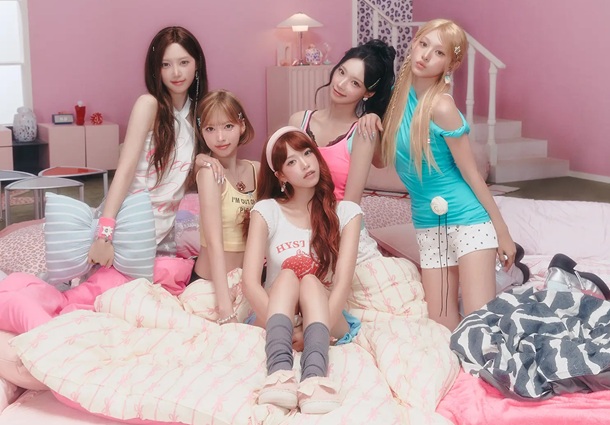
The sound marks a shift away from Itzy’s darker title tracks of late, as does the MV’s pastel, painterly surrealism. However, one can sense influences of their solo work, like the dreamlike candy-colored aesthetic of Yuna’s “Ice Cream” and the bright synths of Yeji’s “Air.” At the same time,”Motto” visually asserts that it is part of Itzy’s lineage. The MV opens with a series of dioramas of miniature sets from Itzy’s past music videos from “Dalla Dalla” to “Sneakers”, and the last one depicts the white castle featured in the rest of “Motto.”
In the past, Itzy have ended their MVs with a signature crown pose signifying their brand of self-confidence. “Motto” casts aside that move, but instead portrays the construction of a castle with seemingly handcrafted sets. The imagery reflects the lyrics’ sentiments that love and support makes them “fearless” even when feeling “alone and so lost in the dark.” Thus “Motto” feels like an affectionate tribute to fans, who have been the foundation of the group’s confidence all along.
AkMu – “Joy, Sorrow, A Beautiful Heart”
Unlike the other MVs in this Unsung Artists, AkMu’s “Joy, Sorrow, A Beautiful Heart” does not restrict any other colors from the spectrum. However, most of the MV seems to be bathed in morning light, looking soft and earthy. This color palette has a calming effect, which is fitting for the song. Lee Chanhyuk wrote this ballad to help his sister Suhyun heal from a period of depression, which the MV dramatizes, gradually moving from Suhyun’s isolation to connection with community.
The scenes of AkMu and their friends creating art, frolicking in costumes, and planting a tree in the desert effectively balance warmth and whimsy. Another scene, with the group posing for a photograph, evokes melancholy as Chanhyuk sings over a piano outro. The shifting tones of the MV match the sentiments of the chorus, which Chanhyuk and Suhyun sing in harmony:
Your tears in harmony with your laughter
Nothing in the world is better than this
Cloudy days, sunny days, aching days
Fit them together piece by piece and you’ll see the completed puzzle
The song’s lyrics acknowledge the presence of joy and sorrow in human experience, with both necessary for the “completed puzzle” of life. Even when the MV ends in a cataclysm, the message is still a comforting one. “Joy, Sorrow, A Beautiful Heart” affirms that life is precious because of its cloudy, aching, and even final days.
(YouTube [1][2][3][4][5][6][7]. Lyrics via Genius [1][2]. Images via JYP Entertainment).




 English (US) ·